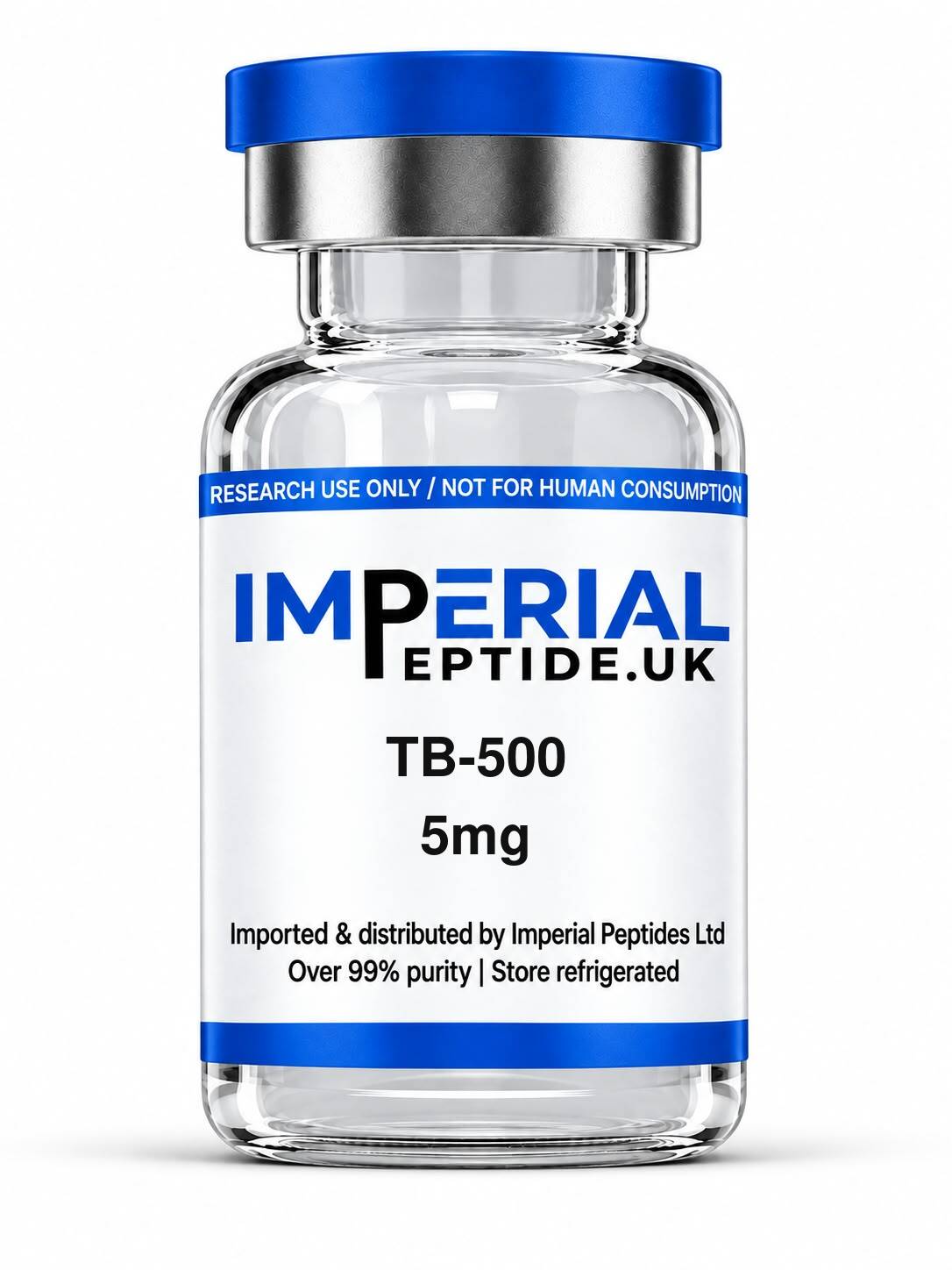
TB-500 is a synthetic peptide corresponding to the active region of Thymosin Beta-4 (Tβ4), a 43 amino acid protein ubiquitously expressed in mammalian tissue. TB-500 specifically represents the actin-binding domain of Tβ4 — the fragment responsible for the protein’s most studied biological activities. It is one of the most widely investigated regenerative peptides in preclinical literature.
Biological Background
Thymosin Beta-4 is encoded by the TMSB4X gene and is present at high concentrations in platelets, neutrophils, macrophages, and wound fluid. Its primary role in normal physiology appears to be sequestration of G-actin (monomeric actin), regulating the dynamics of the actin cytoskeleton and influencing cell migration, tissue repair, and inflammation. Following tissue injury, Tβ4 is rapidly released and upregulated at wound sites.
Key Research Areas
Wound Healing and Tissue Regeneration
In dermal wound models, Tβ4/TB-500 has been shown to accelerate re-epithelialisation and collagen deposition. A landmark study published in the Annals of the New York Academy of Sciences demonstrated that topical Tβ4 application significantly reduced healing time in full-thickness dermal wounds in rats. The mechanism involves promotion of keratinocyte migration and upregulation of laminin-5, a key matrix protein for epithelial adhesion.
Cardiac and Vascular Research
TB-500 has attracted particular interest in cardiac research. Studies in myocardial infarction models have reported that Tβ4 promotes the migration of epicardial progenitor cells and supports cardiomyocyte survival following ischaemic injury. Research published in Nature identified Tβ4 as a key mediator of epicardial activation and demonstrated its potential to reactivate dormant cardiac progenitor cells in adult tissue.
Musculoskeletal Applications
Preclinical research has explored TB-500 in tendon and muscle injury models. The peptide appears to reduce inflammation, promote satellite cell activation in muscle, and support the structural remodelling of connective tissue. Studies in equine tendon repair have been particularly well-documented, with reports of improved histological outcomes in treated subjects.
Pharmacokinetics
Thymosin Beta-4 and its fragments are small, hydrophilic peptides with good aqueous solubility. Subcutaneous administration in animal models shows rapid distribution, with distribution half-lives measured in minutes and elimination half-lives of several hours. The peptide does not appear to cross the blood-brain barrier significantly under normal conditions.
Research use only: TB-500 supplied by Imperial Peptide is intended exclusively for in vitro and in vivo laboratory research. It is not approved for human or veterinary therapeutic use.